
Loading

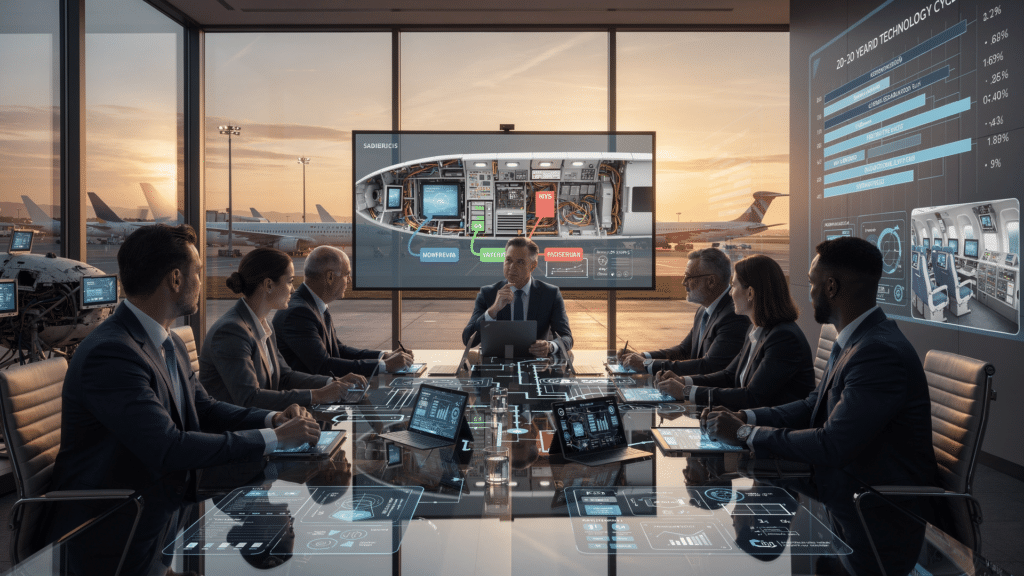
Selecting an IFE system can represent one of the most significant technology investments an airline will make over the next decade, especially when talking about seatback screens. With aircraft lifespans extending 20-30 years while technology cycles accelerate every 3-5 years, the stakes have never been higher. A poorly chosen platform can lock you into obsolete technology, drain resources through hidden costs, and leave passengers disappointed with outdated experiences. Before you sign that contract, you need answers to seven critical questions that will determine whether your investment delivers value or becomes a costly regret.
The aviation industry has witnessed a fundamental shift in how passengers interact with in-flight entertainment systems. What once was a simple hardware decision—choosing between a few seatback screen providers—has evolved into a complex strategic choice involving software platforms, connectivity infrastructure, revenue models, and ecosystem integration. Airlines that approach this decision with outdated evaluation criteria risk making million-dollar mistakes that will haunt them for years.
The transformation of in-flight entertainment systems over the past decade has been nothing short of remarkable. Traditional embedded systems, where airlines purchased hardware boxes that played pre-loaded content, have given way to sophisticated digital platforms that stream content, collect passenger data, enable transactions, and integrate with broader airline technology ecosystems.
This shift from hardware to software-centric platforms changes everything about how you should evaluate potential systems. In the past, you compared screen sizes, processor speeds, and storage capacity. Today, you need to assess API architectures, cloud compatibility, update mechanisms, and data analytics capabilities. The physical components matter less than the platform’s ability to evolve, integrate, and generate value beyond basic entertainment.
Passenger expectations have evolved in parallel with consumer technology. Travelers who stream personalized content at home, shop seamlessly across devices, and expect instant connectivity now bring those same expectations onboard. They want to start watching a show on your mobile app, continue it on the aircraft, and pick up where they left off after landing. They expect the same level of personalization they receive from Netflix or Spotify. An IFE system that can’t meet these expectations will feel dated before it’s even fully deployed across your fleet.
Connectivity has moved from a premium amenity to a baseline expectation. With LEO satellite constellations promising global high-speed coverage and 5G networks expanding rapidly, passengers assume they’ll have home-like internet access at 35,000 feet. This connectivity transforms what an IFE system can do—enabling live content, real-time personalization, cloud-based services, and data-driven engagement that was impossible with traditional embedded systems.
Perhaps most critically, software now matters as much as hardware in determining system value. The ability to push over-the-air updates, add new features without aircraft downtime, integrate with emerging technologies like AI, and adapt to changing passenger preferences depends entirely on software architecture. An IFE platform with inflexible software becomes obsolete regardless of how advanced its hardware might be.
Before evaluating specific systems, you need clarity on what passenger experience you’re trying to deliver. This strategic decision should drive your technology choices, not the other way around. The right answer varies dramatically based on your route network, product positioning, and passenger demographics.
Long-haul versus short-haul operations require fundamentally different approaches. On transcontinental or international flights lasting 6-15 hours, passengers expect robust entertainment options, and the investment in seatback screen systems can be justified by the enhanced experience and revenue opportunities. Short-haul flights under three hours present different economics—passengers may be satisfied with BYOD solutions that let them stream content to their own devices, reducing weight, maintenance costs, and installation complexity.
The choice between BYOD solutions and traditional seatback screen installations depends on your route network and passenger demographics. Premium business travelers often prefer the quality of dedicated screens, especially in long-haul premium cabins where the entertainment system signals service quality. Leisure travelers and younger passengers may be perfectly content streaming to their tablets or smartphones, particularly on shorter flights. Some airlines are adopting hybrid approaches, installing screens in premium cabins while offering wireless streaming in economy.
Your market positioning—premium or low-cost—shapes appropriate technology choices. Premium carriers competing on service quality may need cutting-edge systems with large high-resolution displays, extensive content libraries, and advanced features like live television and gaming. Low-cost carriers focused on operational efficiency might prioritize lightweight wireless solutions that minimize aircraft downtime and maintenance costs while still meeting basic passenger expectations.
Finally, consider whether you’re providing entertainment only or broader engagement. Modern in-flight entertainment systems can serve as platforms for destination information, duty-free shopping, loyalty program interaction, and personalized offers. If your strategy involves using the system to drive ancillary revenue and deepen customer relationships, you need a platform designed for engagement, not just content playback. This strategic clarity will guide every subsequent evaluation criterion.
Technology evolves faster than aircraft, creating a fundamental mismatch that makes future-proofing essential. Depending on the selected architecture (steaback screen, hybrid or full BYOD) an IFE system installed today needs to remain relevant and valuable for 10-15 years, even as passenger expectations, connectivity options, and available technologies change dramatically. The platform you choose must be designed for evolution, not just current requirements.
LEO and GEO satellite connectivity readiness determines whether your system can take advantage of next-generation connectivity. Low Earth Orbit satellite constellations promise significantly higher speeds and lower latency than traditional geostationary satellites, enabling new capabilities like live content streaming, real-time personalization, and cloud-based services. Your IFE system should be designed to allow you to upgrade connectivity without replacing the entertainment platform.
Over-the-air update capabilities separate modern platforms from legacy systems. The ability to push most software updates, add new features, fix bugs, and refresh content without requiring aircraft downtime is invaluable. Modern IFE system platforms must support wireless connectivity and cloud-based services that enable continuous improvement. Physical access needs to be used only for very specific use cases such as certified software updates.
Modular architecture provides flexibility to upgrade components independently rather than replacing entire systems. Can you swap out media servers without changing seat displays? Can you upgrade connectivity modules without touching the content management system? Modular design reduces upgrade costs and extends platform life by allowing targeted improvements rather than wholesale replacement.
Open APIs enable integration with current and future airline systems, third-party services, and emerging technologies. A closed, proprietary platform limits your ability to add new capabilities, integrate with partners, or adopt innovative services. Open APIs allow you to connect your IFE system with loyalty programs, mobile apps, retail platforms, and future technologies that don’t even exist yet. This openness is essential for long-term value.
Purchase price represents just the beginning of your financial commitment. The best in-flight entertainment systems seamlessly integrate with airline loyalty programs and mobile apps, but they also come with a complex web of ongoing costs that can dwarf the initial investment. Understanding total cost of ownership is essential for making informed decisions and avoiding budget surprises.
Installation costs extend far beyond the hardware price tag. Aircraft downtime during installation represents lost revenue—every day an aircraft sits in a hangar for IFE installation is a day it’s not generating income. Installation complexity varies significantly between selected architecture, with some requiring extensive aircraft modifications and others designed for rapid deployment. Factor MRO costs and the opportunity cost of grounded aircraft when comparing options.
Certification requirements add significant time and expense to any IFE deployment. Systems must meet stringent aviation safety standards, and the certification process can take months or years depending on system complexity and regulatory jurisdiction. Some vendors provide turnkey certification support especially when the modification involves STC, while others leave airlines to navigate the process independently. Understanding certification timelines, costs, and vendor support levels is critical for realistic project planning.
Maintenance costs accumulate over the system’s lifetime and vary widely between platforms. Embedded seatback systems require regular hardware maintenance, screen replacements, and component repairs. Wireless systems have fewer physical components but may require more frequent software updates and network infrastructure maintenance. Ask vendors for detailed maintenance cost projections based on actual airline deployments, not theoretical estimates.
Content updates represent an ongoing operational expense that many airlines underestimate. Licensing agreements with studios and content providers typically require monthly or quarterly fees. Content refresh cycles—how often you update movies, TV shows, and other entertainment—impact both licensing costs and passenger satisfaction. Some platforms include content management services, while others require airlines to handle licensing, curation, and updates independently.
Software licensing fees can take various forms—annual subscriptions, per-seat charges, or usage-based pricing. Before you sign a contract for an IFE platform, understanding the full scope of your investment is critical. Clarify what’s included in the base license and what requires additional fees. Some vendors charge separately for advanced features like personalization engines, analytics platforms, or advertising capabilities. These costs can escalate significantly over time.
Content licensing extends beyond entertainment to include maps, games, destination information, and other passenger-facing content. Each content category may have separate licensing requirements and costs. Understanding the full content ecosystem and associated fees prevents budget surprises and ensures you can deliver the passenger experience you’ve promised.
Data costs for connectivity-dependent systems can be substantial. If your IFE relies on 4G/5G networks and/or in-flight connectivity for content delivery, streaming, or cloud services, you’ll incur ongoing data charges. These costs vary based on coverage areas, bandwidth consumption, and service provider agreements. As passengers increasingly expect connected experiences, data costs will likely increase over time.
Efficient IFE can transform passenger experience while generating significant revenue that offsets operational costs and improves return on investment. Today’s in-flight entertainment systems have evolved far beyond simple movie players into platforms for advertising, retail, and personalized engagement that create new income streams.
Advertising opportunities on modern IFE platforms can generate substantial revenue, particularly on high-traffic routes. Display advertising on welcome screens, content menus, and moving maps reaches a captive audience with high engagement rates. Video advertising before movies or during natural content breaks mirrors the streaming service model passengers already accept. Some airlines report advertising revenue that covers 20-30% of their IFE operational costs. The key is choosing a platform with robust advertising management tools, targeting capabilities, and reporting that attracts premium advertisers.
Retail integration transforms your IFE into a digital storefront for duty-free shopping, destination services, and branded merchandise. Passengers can browse products, place orders, and arrange delivery to their seat or home or arrival gate. The best in-flight entertainment systems seamlessly integrate with airline loyalty programs and mobile apps to enable frictionless transactions. Integration with inventory management and fulfillment systems ensures smooth operations. Airlines with sophisticated retail platforms report significant ancillary revenue growth, particularly on international routes where duty-free shopping is popular.
Loyalty program integration creates opportunities for targeted offers, points redemption, and status-based personalization. Passengers can check their account balance, redeem points for upgrades or purchases, and receive personalized offers based on their loyalty tier and preferences. This integration deepens customer relationships and encourages program engagement. An IFE that connects with your loyalty platform enables data-driven marketing that drives both immediate revenue and long-term customer value.
Destination services—hotel bookings, ground transportation, tours, and activities—represent high-margin revenue opportunities. Passengers planning their trips are receptive to relevant offers, and the IFE provides an ideal platform for destination marketing. Partnerships with hotels, car rental companies, and tour operators can generate commission revenue while enhancing the passenger experience. The platform should support rich media content, booking capabilities, and integration with destination partners.
Premium Wi-Fi sales can be promoted and sold through the IFE interface. Rather than requiring passengers to navigate separate connectivity portals, integrated systems allow seamless Wi-Fi purchase alongside entertainment selection. Bundled offers—entertainment plus connectivity packages—can increase take rates and average transaction values. The platform should support flexible pricing models, promotional campaigns, and usage tracking.
Data-driven engagement uses passenger behavior, preferences, and profile information to deliver personalized offers and content recommendations. An IFE with robust analytics can identify high-value passengers, predict purchase propensity, trigger relevant offers at optimal moments, and feed your Customer Data Platform or CRM. This personalization increases conversion rates and revenue per passenger while improving the passenger experience through relevant recommendations rather than generic advertising.
Efficient IFE can transform passenger experience while generating significant revenue that offsets operational costs and improves return on investment. Today’s in-flight entertainment systems have evolved far beyond simple movie players into platforms for advertising, retail, and personalized engagement that create new income streams.
Advertising opportunities on modern IFE platforms can generate substantial revenue, particularly on high-traffic routes. Display advertising on welcome screens, content menus, and moving maps reaches a captive audience with high engagement rates. Video advertising before movies or during natural content breaks mirrors the streaming service model passengers already accept. Some airlines report advertising revenue that covers 20-30% of their IFE operational costs. The key is choosing a platform with robust advertising management tools, targeting capabilities, and reporting that attracts premium advertisers.
Retail integration transforms your IFE into a digital storefront for duty-free shopping, destination services, and branded merchandise. Passengers can browse products, place orders, and arrange delivery to their seat or home or arrival gate. The best in-flight entertainment systems seamlessly integrate with airline loyalty programs and mobile apps to enable frictionless transactions. Integration with inventory management and fulfillment systems ensures smooth operations. Airlines with sophisticated retail platforms report significant ancillary revenue growth, particularly on international routes where duty-free shopping is popular.
Loyalty program integration creates opportunities for targeted offers, points redemption, and status-based personalization. Passengers can check their account balance, redeem points for upgrades or purchases, and receive personalized offers based on their loyalty tier and preferences. This integration deepens customer relationships and encourages program engagement. An IFE that connects with your loyalty platform enables data-driven marketing that drives both immediate revenue and long-term customer value.
Destination services—hotel bookings, ground transportation, tours, and activities—represent high-margin revenue opportunities. Passengers planning their trips are receptive to relevant offers, and the IFE provides an ideal platform for destination marketing. Partnerships with hotels, car rental companies, and tour operators can generate commission revenue while enhancing the passenger experience. The platform should support rich media content, booking capabilities, and integration with destination partners.
Premium Wi-Fi sales can be promoted and sold through the IFE interface. Rather than requiring passengers to navigate separate connectivity portals, integrated systems allow seamless Wi-Fi purchase alongside entertainment selection. Bundled offers—entertainment plus connectivity packages—can increase take rates and average transaction values. The platform should support flexible pricing models, promotional campaigns, and usage tracking.
Data-driven engagement uses passenger behavior, preferences, and profile information to deliver personalized offers and content recommendations. An IFE with robust analytics can identify high-value passengers, predict purchase propensity, trigger relevant offers at optimal moments, and feed your Customer Data Platform or CRM. This personalization increases conversion rates and revenue per passenger while improving the passenger experience through relevant recommendations rather than generic advertising.
Technology changes faster than aircraft, creating a critical challenge for airlines making long-term IFE investments. The platform you choose must be designed to adopt emerging technologies and adapt to changing passenger expectations without requiring wholesale replacement.
AI capabilities are rapidly becoming essential for personalization, content recommendation, and operational optimization. Future-ready in-flight entertainment systems support AI-powered personalization and live content streaming through cloud-based machine learning models that analyze passenger behavior and preferences. The platform should support AI integration for content curation, predictive maintenance, and automated customer service. Systems with rigid architectures can’t easily incorporate AI capabilities, limiting their ability to deliver increasingly expected personalized experiences.
Personalization engines use passenger data, behavior patterns, and preferences to tailor content recommendations, interface layouts, and promotional offers. As passengers become accustomed to Netflix-level personalization, generic entertainment menus feel outdated. The ife system should support sophisticated personalization that learns from each interaction and improves recommendations over time. This requires flexible data architectures, machine learning integration, and privacy-compliant data handling.
Live content streaming—news, sports, social media—requires connectivity, content partnerships, and platform capabilities that many legacy systems lack. Passengers increasingly expect to watch live events, follow breaking news, and stay connected to real-time information during flights. The platform must support live streaming protocols, manage bandwidth efficiently, and integrate with content providers. This capability depends on both connectivity infrastructure and platform architecture.
Cloud services enable capabilities impossible with traditional embedded systems—centralized content management, real-time analytics, remote diagnostics, and continuous updates. Modern IFE system platforms must support wireless connectivity and cloud-based services that enable continuous improvement without aircraft downtime. Cloud architecture also enables rapid deployment of new features, A/B testing of interface changes, and data-driven optimization. Systems designed for on-premise operation can’t easily migrate to cloud architectures.
Edge computing brings processing power closer to passengers, enabling responsive experiences even with limited connectivity. By processing data and rendering content locally while leveraging cloud services when available, edge-enabled systems provide consistent performance regardless of connectivity quality. This hybrid approach—local processing with cloud synchronization—represents the future of IFE architecture. Platforms designed around centralized processing struggle to deliver responsive experiences with variable connectivity.
Evaluating in-flight entertainment systems requires looking beyond hardware specifications and purchase prices to understand total cost of ownership, revenue potential, integration capabilities, and long-term evolution. The seven question categories outlined here provide a framework for comprehensive evaluation that protects your investment and ensures you select a platform that delivers value throughout its lifecycle.
Start by defining your passenger experience strategy—what you’re trying to deliver and for whom. This strategic clarity guides every subsequent decision. Assess future-proofing capabilities to ensure the platform can evolve with technology and passenger expectations. Calculate true total cost of ownership including all ongoing expenses. Evaluate revenue generation potential to understand how the system can offset costs and drive profitability. Verify integration capabilities with your existing technology ecosystem. And confirm the platform can adopt emerging technologies like AI, personalization, and cloud services.
An IFE system purchase represents one of the largest technology investments an airline will make, with implications that extend 10-15 years into the future. The most important questions airlines ask when buying IFE focus on total cost of ownership and future-proofing. Taking time to ask these questions thoroughly, demand detailed answers, and verify claims through reference checks will help you avoid costly mistakes and select a platform that delivers lasting value. Before you sign that contract, make sure you have satisfactory answers to all seven question categories. Your passengers, your operations team, and your CFO will thank you.
TRAVELER’S MICRO-MOMENTS Home Capturing the Traveler's Micro-Moments 26 April 2022 microMoments, Technology, traveler Time Is No Longer Measured in Days,…
IFE TO THE RESCUE Home WHEN IFE COMES TO THE RESCUE OF FLIGHT ATTENDANTS! 25 June 2022 Digital Services, IFE,…
Digital AD: IVT-FREE Zone Home DIGITAL INFLIGHT ADVERTISING: AN IVT-FREE ZONE 20 May 2022 Advertising, IVTFREE, Technology In late 2015,…